
The project addressed the step between recording maintenance activity and being able to analyse it consistently: translating engineering narratives into a structured coding scheme.
Rail · Applied machine learning
Turning maintenance narratives into structured reliability insight
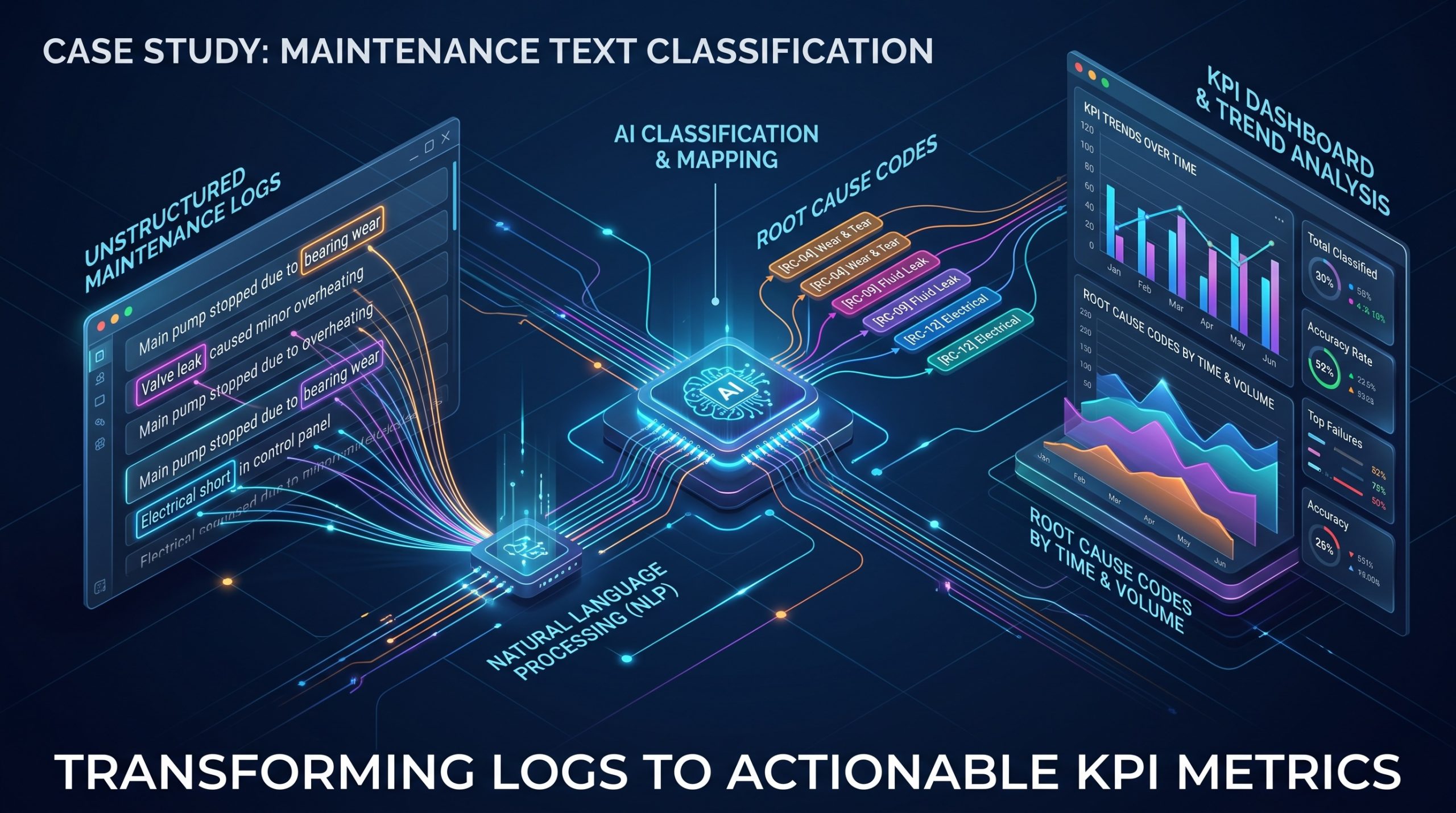
Fleet maintenance descriptions contain useful engineering information, but free text is difficult to aggregate into meaningful measures. Trigger Data developed a machine-learning solution that classified maintenance narratives into root-cause codes, creating structured outputs that Porterbrook could use to develop KPIs and analyse patterns and trends across its maintenance records.
Operational challenge
Porterbrook’s maintenance records held useful information in free-text descriptions. To develop engineering KPIs, those narratives needed to be translated into codes that could be grouped and analysed at a granular level over time, rather than relying only on the wording of individual records.
What Trigger Data built
We developed a machine-learning solution to classify fleet maintenance descriptions into root-cause codes. The classification outputs provided structured data for KPI development and further analysis of the maintenance records.
User workflow
Maintenance descriptions are processed through the classifier and assigned codes. Analysts can then group records by those codes, build engineering measures and investigate maintenance patterns using a structured dataset alongside the original narratives.
Operational outcome
Maintenance text became a usable input to structured KPI development. The solution provided a repeatable way to classify records and connect narrative information to engineering reporting, rather than leaving that information accessible only through individual text entries.
Discuss a similar challenge
Tell us which operational decision your current data or software cannot support.